
Pulumi Accelerates Software Delivery by Giving AI Agents a Governed Path to Production and Back
Pulumi Delivery and Pulumi Agents bring everything after code into code, moving every change after commit through the
Press Release Disclaimer: This is a press release distributed through the XPR Media network. It has not been independently verified by our newsroom.


Pulumi today announced a major platform expansion into software delivery, letting AI agents take on software operations at the pace of code with the same governance applied to engineers. Pulumi Delivery and Pulumi Agents accelerate the work that follows code, including provisioning, configuration, secrets, policy, and software delivery. Pulumi Delivery lets teams define delivery pipelines as code in TypeScript, Python, Go, and other languages of their choice. Each Pulumi Agent works with its own identity and scoped permissions, and every change it suggests arrives as a reviewable code diff with a deterministic plan that moves through the pull requests, CI steps, and policy checks the team already runs.
This press release features multimedia. View the full release here: https://www.businesswire.com/news/home/20261118382214/en/
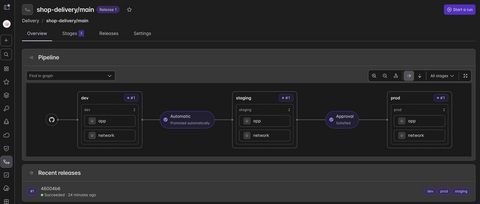
Pulumi Delivery and Pulumi Agents accelerate the work that follows code, including provisioning, configuration, secrets, policy, and software delivery.
Coding agents today write application code faster than most teams can ship it. The backlog builds in the steps that follow, which still run through cloud consoles, copy-pasted settings, and other manual work that models rarely see in training. Pulumi expresses that work in the languages models already know, so Claude Code, Codex, and Pulumi’s own agents can treat it as they would the code they already ship, at scale.
“Agents now write a growing share of the code teams ship, and the next question is what happens to everything after that,” said Joe Duffy, co-founder and CEO of Pulumi. “Provisioning, configuration, secrets, policy, and delivery are where projects stall, and our customers have expressed that work in real programming languages since 2017. That bet on languages turned out to be good for agents as well as people. The new capabilities we’re announcing today let agents do this work the way engineers do, as code anyone on the team can review, under policies the team already trusts, with autonomy that grows as each change proves itself.”
Pulumi Delivery
In most organizations, delivery logic lives in standalone pipeline files and manual console steps, spread across tools that operate separately from infrastructure, secrets, and policy. Pulumi Delivery lets teams define how a change moves from development through staging to production in the same languages they use for infrastructure, including TypeScript, Python, Go, HCL, and YAML. Pipelines therefore share Pulumi’s type system, policy engine, secrets management, and state model.
With Pulumi Delivery:
- Teams express promotion logic, canary rollouts, blue-green deployments, and multi-region sequencing as composable, testable code.
- An AI reviewer assesses each change’s risk and either promotes it to production or routes it to a person for review. Teams can gate releases on decision models such as TypeSafe AI’s Jev, which return a calibrated risk score the pipeline checks against a team-set threshold.
- Agents can respond to a production signal from an ever-growing array of observability providers by preparing a fix and opening a pull request under policy. The fix then runs through the full delivery pipeline, with approval gates at every stage.
- The pipeline, policy, risk assessment, and infrastructure live in one codebase that engineers and agents can both read.
Pulumi Agents
Pulumi places an agent’s guardrails in the change itself. Every action an agent takes becomes code that produces a deterministic plan, which policy and people check before anything in the cloud changes. Agents that call cloud APIs directly leave little record of what changed or why. Each Pulumi Agent has its own identity that limits which stacks and environments it can reach, along with scoped credentials managed through Pulumi ESC.
Teams can start with the agents Pulumi provides or define their own in code or in Pulumi Cloud. Pulumi checks every request made against both the requesting user’s permissions and the agent’s role. Each proposed change is validated against the same policy packs that evaluate changes made by people, whether custom rules or prebuilt rules mapped to SOC 2, HIPAA, and ISO 27001 controls. Organizations decide how far each agent’s autonomy extends, from assisted mode, where a person approves every action, to supervised mode, where agents handle routine work such as compliance fixes and notify the team.
With Pulumi Agents:
- Provided agents cover incident investigation, deployment troubleshooting, cost investigation and cleanup, drift response, upgrade maintenance, security remediation, and infrastructure migration.
- Agents’ permissions are written in code, and widening them requires a reviewed pull request.
- Agents start from events in PagerDuty, Datadog, Honeycomb, and other tools, from a recurring schedule, or from a direct request.
- Any agent whose work results in a change prepares a pull request for the team to review and merge.
- Every change records the agent’s identity alongside the teammates who requested and merged it.
- Agents work with teams in Slack, where they share findings, ask questions when intent is unclear, and route authorized replies back into the task.
Built for the Estates Teams Already Run
Both products work across organizations’ existing infrastructure. Pulumi runs HCL natively alongside TypeScript, Python, Go, .NET, Java, and YAML, and its Terraform state backend hosts existing Terraform stacks, unmodified. Pulumi’s discovery feature brings resources provisioned with Terraform, console changes, or Pulumi into one view that agents can work from. Pulumi policies apply across that view, so the same rules cover resources whether Terraform, a console session, Pulumi, or an agent created them.
What Customers Are Saying
“When demand for Jev took off after launch, Pulumi let us scale and evolve our infrastructure rapidly with the dev lifecycle, tooling, and practices we already had,” said Daniel Gafni, Member of Technical Staff, Typesafe AI. “We wanted to treat infrastructure like the rest of our software: composable, reusable, and familiar to engineers. Nothing like good ol’ Python for creating AWS resources! Now even the call on whether a change ships can be made by a model. That’s exactly the kind of decision we built Jev to make.”
“Our engineers and their coding agents are writing and validating infrastructure code every day. Pulumi is what lets us delegate that work with confidence,” said Ashish Desai, Senior IT Engineer, Legora. “Agents work in real code, and the platform gives us the access controls and visibility to let every team move as fast as they want without putting the rest of our environment at risk.”
“At Andesite, we’ve been shipping every release out to ten separate customer environments by hand. It’s a process that’s struggling to scale,” said Ben Miletic, Staff Software Engineer, Andesite. “Pulumi Delivery is the approach we’ve been looking for. Defining how a release gets to our customers in code means we can add customers without adding manual work.”
Availability
Pulumi Agents and Pulumi Delivery are available today in public preview on all tiers of Pulumi Cloud, including a free tier. Teams can get started at www.pulumi.com.
About Pulumi
Engineering teams and AI agents use Pulumi to provision, configure, secure, deliver, and operate cloud infrastructure in general-purpose programming languages, through one review and policy path. Founded in 2017 and headquartered in Seattle, Pulumi combines infrastructure as code with Pulumi ESC for secrets and configuration, a policy-as-code engine, discovery across cloud estates, and AI agents through Neo and Pulumi Agents. The platform supports more than 180 providers, from AWS, Azure, and Google Cloud to Stripe and Supabase, and serves thousands of customers, including BMW, Snowflake, Wiz and Supabase. Learn more at www.pulumi.com.
View source version on businesswire.com: https://www.businesswire.com/news/home/20261118382214/en/
Media gallery
