Typeface Launches the Next Generation of Its Orchestration Engine, with Adaptable AI Experiences for Humans and Agents
A brand's intelligence now extends beyond Typeface into the AI tools teams already use - including Claude, ChatGPT and
Press Release Disclaimer: This is a press release distributed through the XPR Media network. It has not been independently verified by our newsroom.
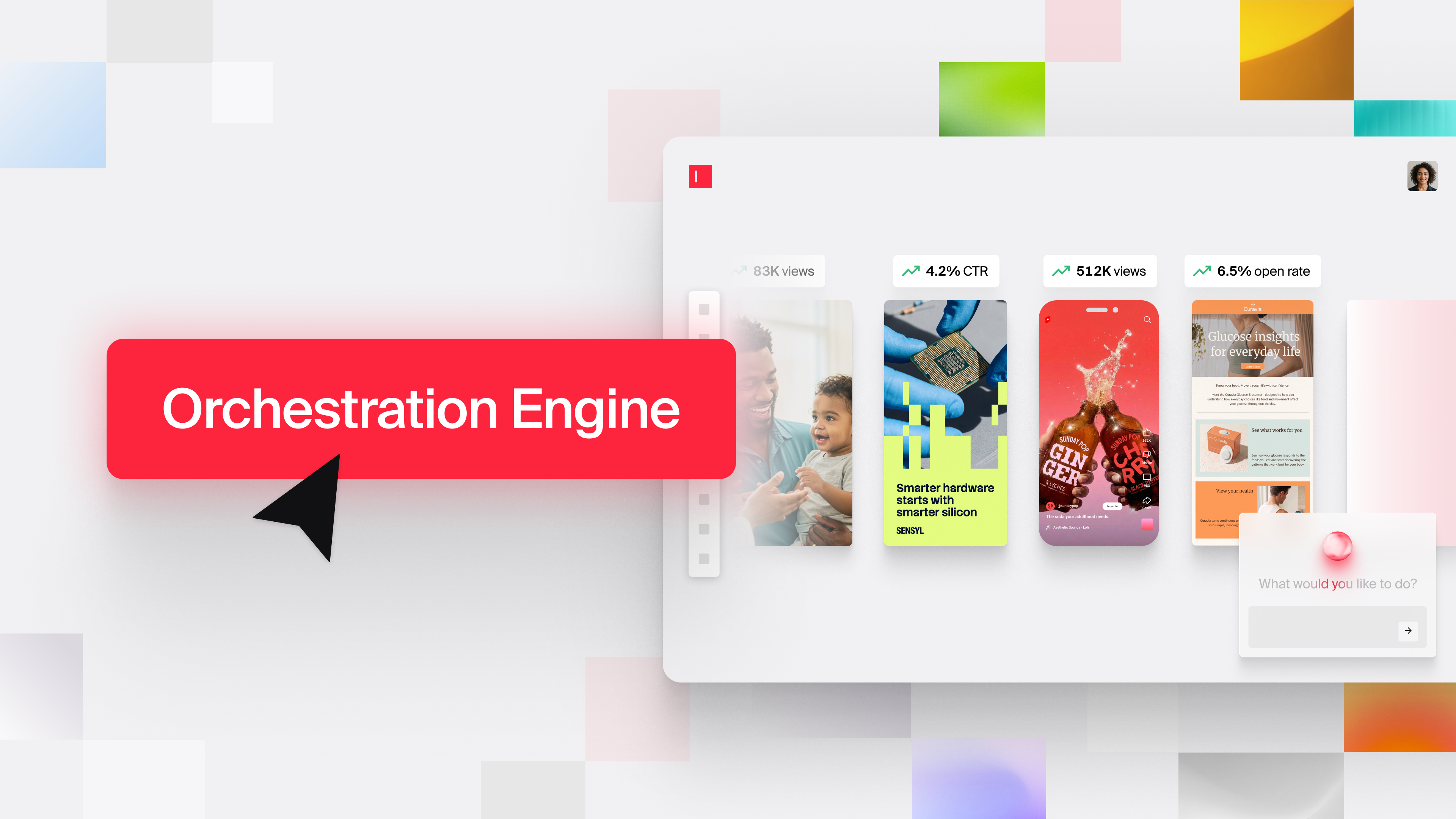

A brand’s intelligence now extends beyond Typeface into the AI tools teams already use – including Claude, ChatGPT and Gemini – while Arc Graph, Arc Fabric, and Arc Loop connect marketing from idea to activation.
PALO ALTO, CA / ACCESS Newswire / September 22, 2026 / Typeface today announced the next generation of its Orchestration Engine, advancing three products that now work as one system: Arc Graph for brand intelligence, Arc Fabric for orchestration, and Arc Loop for closed-loop performance. Together, they close the loop across channels, feeding real campaign results back into what agents create next, so every campaign starts smarter than the last.
“For years, enterprises have had more insight about their customers than ever, but they couldn’t act on it. That is the bottleneck we set out to close,” said Abhay Parasnis, Founder and CEO of Typeface. “The shift is teaching AI to understand a brand deeply, build agents around how each team actually works, and get smarter as campaigns perform – closing the loop from intelligence to execution and back, so every campaign makes the next one better. And it points to experiences that adapt to whoever is on the other side, whether a person or an AI agent.”
What’s New
Arc Graph: The brand brain that makes brand intelligence actionable
Every brand lives in a thousand places: guidelines, past campaigns, performance data, and the judgment of the few people who know what “sounds like us.” Most AI tools treat that knowledge like a stranger writing in the brand’s voice on day one, and every generic agent a team adds widens the gap between speed and quality.
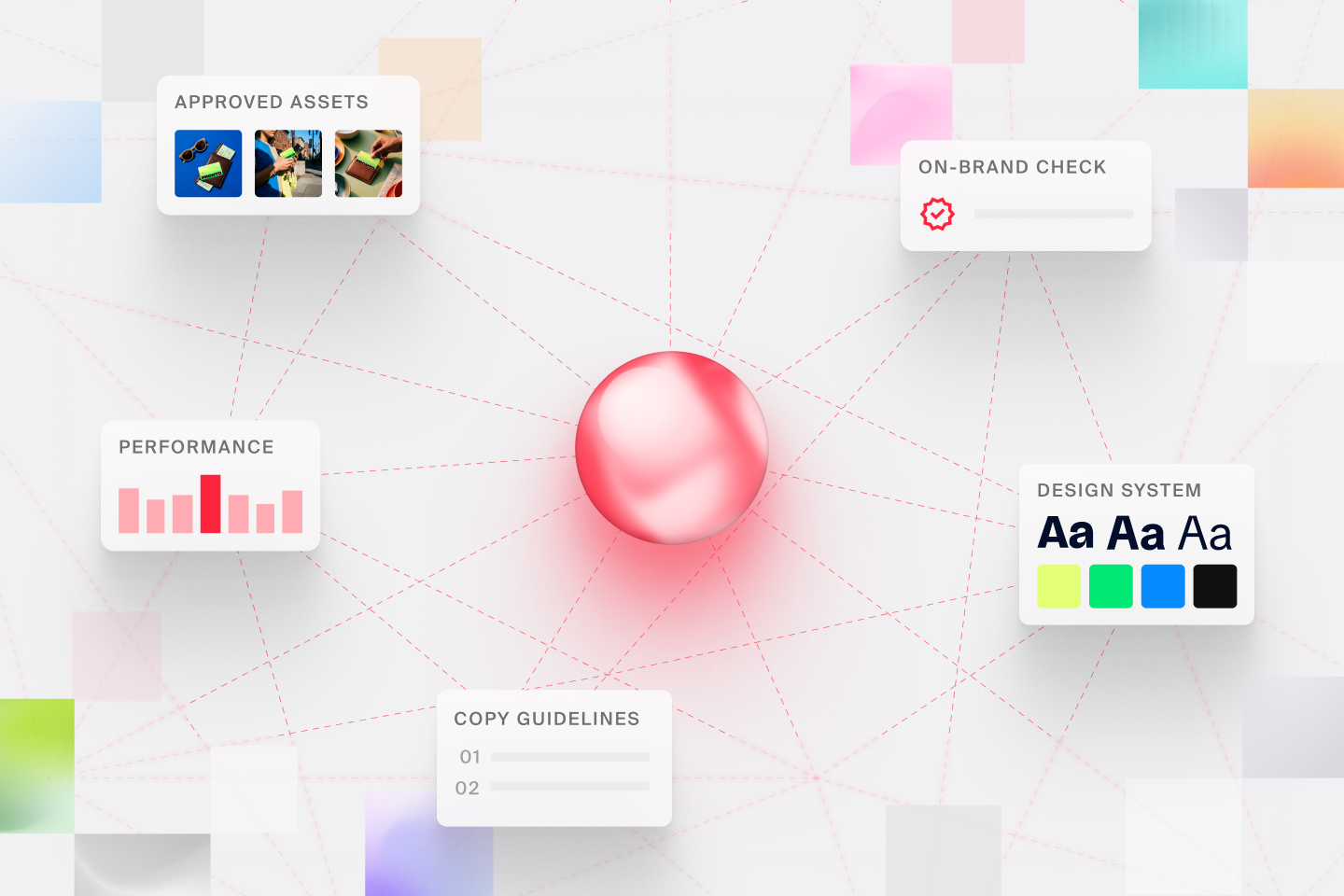
Arc Graph is Typeface’s proprietary context layer, rebuilt from hand-configured rules into a system that extracts, validates, and enforces a brand at the moment AI creates. It turns brand guidelines into structured rules that Typeface, and now external AI tools, can apply. Arc Graph highlights include:
- Knowledge graph: What the organization has learned, held as structured, reusable knowledge that grows with every campaign.
- Brand ontologies and voices: Multiple voices learned from how a brand actually writes, with hierarchy resolution for parent and sub-brands.
- Asset management and design system: An approved content library with AI-native search, plus colors, typography, and logos captured as enforceable structure.
- Brand Agent: Brand compliance for every marketer, applied as content is created, showing which rule applied and why.
- Arc Graph for Claude, ChatGPT, and Gemini: The same brand intelligence can extend beyond Typeface into the general AI tools teams already use.
“At Chime, everything starts with our members. But reaching millions of people with the right message, at the right moment, while staying unmistakably Chime is an incredibly complex challenge. Typeface gives our teams the ability to move at the speed our members and culture demand – turning our brand into something they can instantly build with and scale. That means less time spent on the mechanics of content creation, and more time focused on what marketers do best: creating bold ideas and campaigns that connect with people and drive growth,” said Vineet Mehra, Chief Growth and Marketing Officer, Chime.
Arc Fabric: Marketing agents tuned to how each team works
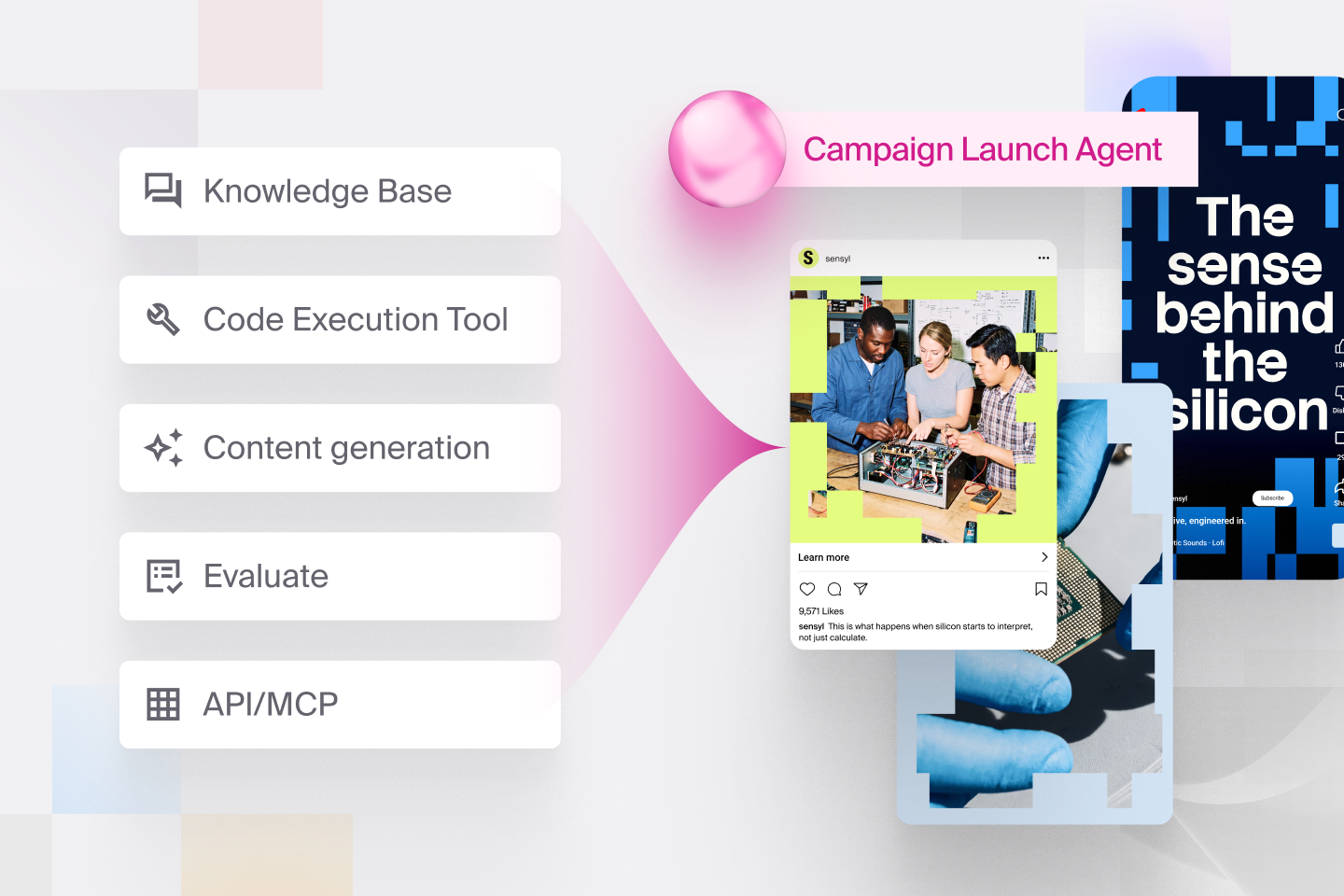
Arc Fabric is the orchestration layer, bringing the power of modern AI coding platforms to marketing for the first time. It spans a runtime that powers agentic work, adaptive agents that carry it out across a team’s channels and systems, and a collaborative workspace where people and agents create together. Instead of configuring one generic system for all, teams build agents tuned to their own workflows, systems, and channels.
Key capabilities:
- One platform for the whole workflow: Conversational chat, custom agents, and extensibility, so a team runs the entire workflow in one place.
- Agents that finish the job: They plan multi-step work, use a team’s own systems required to complete it, and check their own output before handoff.
- Reusable skills: Teams can turn repeatable marketing tasks and expertise into skills that agents can use again across campaigns and workflows.
- Governed and extensible: Control data access and agent autonomy, and extend through MCP, APIs, webhooks, and custom code.
“For us, transformation isn’t adding AI on top of existing processes – it’s rethinking how the work gets done. Our goal is a true segment-of-one experience – where every interaction feels made for that client. Typeface helps us scale personalized content with brand intelligence and governance to drive measurable business impact,” said Rosa Rita, Global Chief Marketing Officer, J.P. Morgan Asset & Wealth Management.
Arc Loop: Closing marketing’s last mile
Arc Loop is the optimization layer, and it closes marketing’s last mile, where performance data has long sat in a dashboard while the next campaign is built from best practice. According to Typeface’s Signal Report research, 93% of marketing leaders say creation, activation, and optimization should work as one system, yet fewer than two in five have connected content ecosystems today. Arc Loop closes that gap: it brings real performance data back into Typeface, turns it into grounded learnings, and feeds them into what agents create next, so every campaign builds on what the last one learned. Unlike point tools that optimize delivery inside a single channel, Arc Loop learns across channels and generates the next campaign from what it finds – turning performance into new, on-brand content, not just tuned targeting.
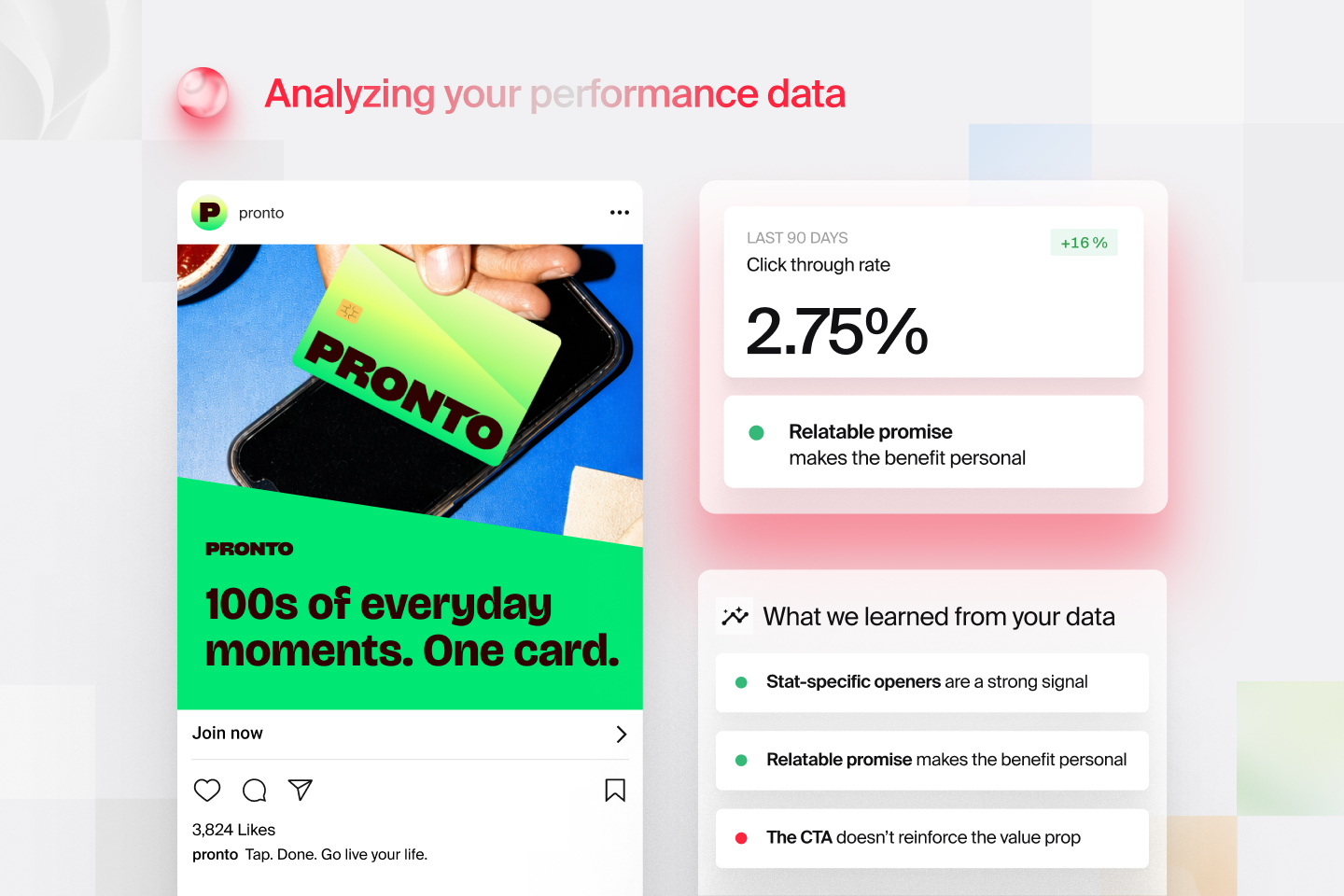
- Performance flows back automatically: Ad platforms (Google Ads), marketing platforms (Salesforce Marketing Cloud, HubSpot), and warehouses (Google BigQuery, Salesforce Data Cloud) feed results in automatically, or teams can start instantly with a zero-setup CSV upload, no engineering required.
- Every recommendation shows its work: Real campaign signals become ranked, explainable content variants, with human approval before anything publishes.
- Learnings write back to Arc Graph: Each finding becomes reusable knowledge, so what works informs what gets created next and every campaign starts smarter than the last.
Arc Graph, Arc Fabric, and Arc Loop are available to enterprise customers today.
What’s Next: Adaptive experiences for people and AI agents
The web was built for a world where brands published fixed experiences and people navigated them. AI agents are changing that, and people now arrive with far more context about what they want. Typeface believes digital experiences will increasingly be assembled and adapted for the person, or agent, on the other side, grounded in a brand’s approved content and improved by what the system learns.
Every brand surface will increasingly serve two audiences at once: people who expect responsive, conversational experiences, and AI agents seeking structured, authorized answers. Agent traffic on the web is now rivaling human traffic, yet most sites still serve agents pages built for people. Over time, these experiences will adapt closer to the moment of interaction, shaped by the context a person or agent brings, always grounded in brand-approved, human-reviewed content, so responsiveness never comes at the cost of control.
The first stages are already in preview with select design partners. At one Fortune 500 brand, marketers use Typeface to build and reshape web experiences conversationally rather than working within rigid templates, compressing work that once took weeks into minutes. The same shift points toward ads that carry their context into the landing experience, emails that start a conversation, and pages that respond to whoever, or whatever, is on the other side.
“This is a fundamental rewiring of how brands meet their audiences, one where a company controls what AI represents about its brand, rather than leaving it to chance. Every brand will need experiences built to speak intelligently to agents, not just to people,” said Vishal Sood, President, R&D Typeface. “That is where digital experiences are heading, and it is the future we are building toward.”
Read more on the Typeface blog.
About Typeface
Typeface is the Orchestration Engine for the world’s leading enterprises, coordinating brand intelligence, AI agents, and enterprise systems across cross-channel marketing operations. Built for large organizations, Typeface combines shared brand intelligence, governed agent workflows, and deep enterprise integration at scale – connecting seamlessly with platforms like Salesforce, Microsoft, and Google – to help teams scale what works without sacrificing quality or control. Trusted by Fortune 500 companies, Typeface helps organizations operationalize AI inside real marketing workflows, turning brand standards, approvals, and performance signals into coordinated systems that improve over time. Typeface is backed by Lightspeed, GV, Salesforce Ventures, Madrona, Menlo, and M12, and has been recognized by Fast Company, Gartner, TIME, LinkedIn, and Adweek as a leader in AI for marketing. Learn more at www.typeface.ai.
For press inquiries, contact Courtney Brigham at press@typeface.ai.
Created in Typeface. Dreamed up by a human.
SOURCE: Typeface
View the original press release on ACCESS Newswire