
Lamar Blackwell, Pittsburgh Education Executive, Launches The Young Executive to Help Emerging Leaders Prepare for the C Suite
Just another WordPress site
Press Release Disclaimer: This is a press release distributed through the XPR Media network. It has not been independently verified by our newsroom.
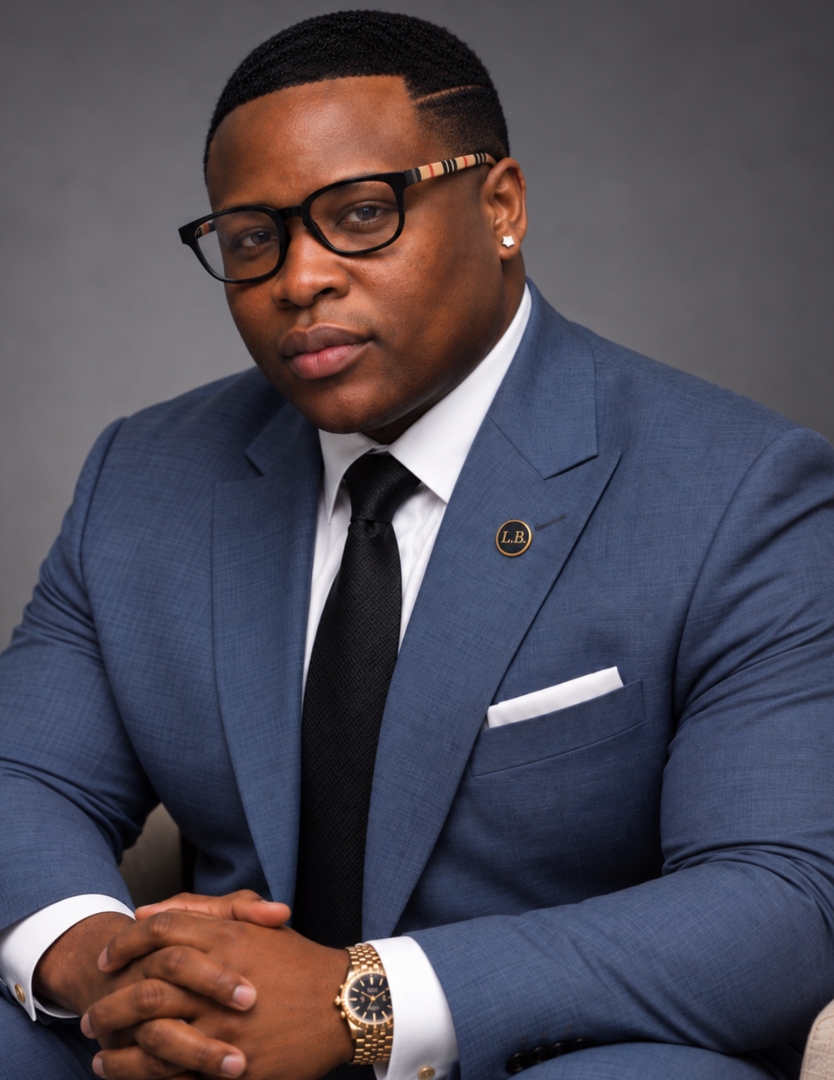

PITTSBURGH, Pa. – October 19, 2026 – Pittsburgh education executive and former nonprofit CEO Lamar D. Blackwell has launched The Young Executive, a professional development and executive advisory platform designed to help ambitious professionals develop the positioning, presence, preparation and strategic thinking required to compete for senior leadership opportunities.
The platform grows from an experience Blackwell knows personally.
After completing college through a dual degree program, Blackwell returned home to Pittsburgh from Atlanta with years of leadership experience, an education and a conviction that he was ready to lead at the executive level. What he did not have was a roadmap for turning that conviction into an opportunity. At 24, he found himself sleeping on his mother’s couch, searching for work and trying to determine what came next. Months of frustration, rejection and uncertainty followed.
Leadership itself was not new to Blackwell. He had played quarterback and linebacker beginning at six years old, served as a class president, worked to help reshape school cultures as a high school student in underserved communities and deliberately sought professional experiences while still in school, including work in law firms and other organizations, to better understand how institutions operated. Yet when he began pursuing executive opportunities, he quickly discovered that believing he could lead and knowing how to communicate that capacity to the people making executive hiring decisions were two very different things.
“I knew I had the capacity to lead, but I had absolutely no blueprint for how to get there,” Blackwell said. “I was applying for opportunities and sometimes sending videos of myself teaching students to organizations where that wasn’t even the story they needed to hear from me. I was throwing things at the wall and hoping something would stick.”
People around him offered practical advice. Some members of his church encouraged him to take a job at Target or Walmart while he continued searching. Blackwell understood where the advice came from, but he remained focused on pursuing executive leadership. What followed was nearly a year of prayer, isolation, frustration, experimentation and relentless refinement.
Lamar Blackwell began studying the process itself. He examined the backgrounds and trajectories of executives who were already occupying the kinds of positions he wanted, many of whom were considerably older and had followed more traditional paths to leadership. He began changing how he presented his own experiences, refining his résumé, studying organizations more deeply and reconsidering how he approached executive interviews.
Instead of treating interviews as exercises in answering questions correctly, Blackwell began approaching them as opportunities to demonstrate how he would think and operate as an executive. His answers increasingly focused not only on what he had accomplished, but on what an organization’s future could look like with him helping to lead it. “I stopped going into interviews simply trying to prove that I could do the job,” Blackwell said. “I started preparing so deeply that through my answers, I could help them see where I believed their organization could go next and how I would help take it there.”
He also perfected the craft of what he coins as executive packaging, “ there is a look that any orginization expects their CEO to embody, and refining your version of that look is important” Blackwell states.
Every rejection became information. Every interview became another opportunity to refine the approach. His résumé changed. His answers changed. His positioning changed. Over time, what had begun as trial and error started becoming a repeatable process. Blackwell says his faith was inseparable from that season. He prayed, praised and continually asked God for direction, even as the professional breakthrough he was seeking remained out of sight. At one point, overwhelmed by the feeling that he was falling behind, Blackwell remembers receiving a “message from God” during prayer that changed the way he viewed his circumstances.
“God said to me, ‘Son, I can do for you in the blink of an eye what it takes a man 10 or 20 years to accomplish,’” Blackwell recalled. “At the time, nothing around me looked like that was about to happen. But I held onto it.”
The trajectory that followed was dramatic. At 24, Blackwell was sleeping on his mother’s couch in Pittsburgh trying to determine how to break into the C Suite. At 25, he became a Chief Executive Officer. By 29, as his career advanced into increasingly senior executive leadership, he was earning approximately $250,000 annually.
For Lamar Blackwell, however, the significance of that journey extends beyond compensation or titles. It was the realization that during the year when he believed nothing was happening, he was actually developing a process for positioning, preparation and executive readiness that would continue serving him throughout his career.
“I can look back now and see that the season when I thought I was standing still was actually a season when I was becoming,” Blackwell said. “I was praying, preparing, studying, failing, adjusting and learning how to communicate what I could do. God changed my circumstances because I was obedient, I was isolated and I was ready to be molded, but He was also preparing me for circumstances I had prayed for.”
He had built a blueprint before he had a name for it. That blueprint would continue evolving as Blackwell moved from pursuing executive opportunities to actually carrying the responsibility of executive leadership. Years later, it would also help inspire The Young Executive.
Long before reaching the traditional age associated with executive leadership, Blackwell was learning how to navigate executive environments. He became a chief executive officer at 25, beginning a leadership journey that would eventually span education, workforce development, nonprofit leadership, local government and one of Pennsylvania’s largest public school systems.
But Lamar Blackwell says becoming an executive at a young age also exposed him to a reality rarely discussed in traditional career development. Getting the title and being prepared to carry the responsibility are two different things. “Becoming a CEO at 25 changed my understanding of leadership,” Blackwell said. “I learned very quickly that a title might get you into a room, but it does not automatically give you credibility in that room. You still have to understand the organization, communicate clearly, ask the right questions, listen carefully, build strong teams, make difficult decisions and ultimately produce results.”
That experience became part of the foundation for The Young Executive.
Expanding Access to the Executive Playbook
The Young Executive is designed primarily for high potential professionals in their 20s and 30s who are preparing for greater levels of leadership, including professionals who may not have inherited the networks, mentorship, sponsorship or exposure that often help people understand how executive careers actually work.
For Blackwell, the challenge is not always a lack of talent. Sometimes it is a lack of access to the unwritten rules. “There are extraordinarily talented people who have never had someone explain how executives think, how senior level interviews are different, how a résumé changes when you are competing for leadership positions, how you communicate enterprise value, or how you establish credibility when you may be the youngest person sitting at the table,” Blackwell said. “Those things can be learned.”
The Young Executive is being developed around a straightforward premise: professionals do not have to wait until they receive an executive title to begin thinking, communicating and preparing like executives. Through executive strategy sessions, résumé and professional positioning, interview preparation, executive communication, professional branding, networking strategy, leadership development resources and practical guidance for navigating senior leadership environments, Blackwell intends to make the executive playbook more accessible.
The platform will also feature leadership content and conversations examining the realities of entering and succeeding in senior leadership, including executive presence, organizational politics, decision making, career transitions, managing experienced teams, communicating with boards and senior stakeholders, and translating professional experience into a compelling executive value proposition.
From Young Black Executive to The Young Executive
The concept has evolved over several years. An earlier iteration, Young Black Executive, grew from Blackwell’s desire to expand access and exposure for young Black professionals and other emerging leaders who often possess ability and ambition but lack proximity to people who can explain how executive opportunities are secured and navigated. That mission remains important to the work.
Blackwell’s own professional journey shaped his belief that representation matters, but that representation must be accompanied by preparation, access and opportunity. The evolution into The Young Executive expands that original vision into a broader platform for ambitious emerging leaders while retaining a particular commitment to professionals from backgrounds historically underrepresented in executive leadership. “The question for me became bigger than how I reached the C Suite early,” Blackwell said. “The more important question was, what have I learned from doing it that could make someone else’s path clearer?”
A Career Built Across Sectors
Lamar Blackwell brings a cross sector perspective to the platform. His career has included executive leadership across education, workforce development, youth development, community development and government. His leadership experience includes serving as Regional CEO of the Center for Employment Opportunities, Founding Executive Director of BUILD Pittsburgh, National Director of School Success for BUILD, executive leadership in local government and community development, and most recently Chief of Staff of Pittsburgh Public Schools.
Across those roles, Blackwell has worked in environments requiring organizational strategy, executive decision making, stakeholder engagement, talent leadership, governance, performance management, community partnership and the translation of ambitious ideas into measurable execution.
He has also experienced leadership from several different vantage points: as a CEO responsible for an organization, as a senior executive alongside other chief executives, and as an enterprise leader working across complex organizations. That distinction is central to what he hopes to offer through The Young Executive.
“Executive leadership is not simply about becoming the person at the top,” Blackwell said. “It is about learning to see the entire enterprise. You have to understand how strategy, people, culture, finances, operations, communication and execution connect. That shift in perspective is one of the biggest differences between being excellent at your job and being prepared to lead an organization.”
Positioning Is More Than a Résumé
One area of particular focus for The Young Executive will be helping professionals understand the difference between experience and executive positioning. Blackwell argues that many high performing professionals undersell themselves because they describe their careers through responsibilities rather than impact. A traditional résumé may explain what someone was responsible for. An executive narrative must explain what became different because that person was there. That means understanding how to communicate scale, results, complexity, organizational influence, decision making and enterprise value. The same principle extends beyond résumés into interviews, professional profiles, networking conversations and executive presence.
“You can have tremendous experience and still communicate it in a way that makes you sound smaller than the work you have actually done,” Blackwell said. “Part of positioning is learning how to accurately communicate your value without exaggerating it.”
Leadership Without Waiting for Permission
The Young Executive also challenges the assumption that executive preparation should begin only after decades in the workforce. Blackwell does not argue that everyone should become a CEO at 25, nor does the platform promise executive titles. Instead, he believes younger professionals can begin developing the habits and perspective associated with senior leadership much earlier.
That includes learning to think beyond one’s department, understanding financial and organizational consequences, becoming comfortable with accountability, communicating with senior stakeholders, developing sound judgment, building relationships across functions and understanding how decisions affect an entire organization. The objective is preparation rather than shortcuts.
“You cannot control when someone gives you an opportunity,” Blackwell said. “You can control whether you have prepared yourself to recognize it, compete for it and carry the responsibility when it comes.”
A Pittsburgh Story With a Broader Mission
Although The Young Executive is designed to reach professionals beyond one city, its development is closely connected to Blackwell’s experiences in Pittsburgh. His leadership journey has included work with young people, families, schools, community organizations, workforce systems and public institutions throughout the region. Those experiences reinforced his belief that talent exists everywhere, while access, exposure and opportunity do not.
Lamar Blackwell, a Morehouse College alumnus and former college football player, also credits education, mentorship, athletics and exposure with shaping his own trajectory. Those experiences continue to influence his approach to leadership development.
For him, The Young Executive represents an opportunity to convert years of executive experience into practical intellectual capital that can benefit others. It is also an evolution of the public identity once captured by the nickname “Mr. CEO.” The point, Blackwell says, was never simply the title. The larger idea was learning to take ownership of one’s direction, understand one’s value and intentionally prepare for the level of responsibility one hopes to carry. With The Young Executive, that philosophy is becoming a platform.
“Success does not have one look, and executive leadership is not everyone’s destination,” Blackwell said. “But whether someone wants to become a CEO, superintendent, entrepreneur, nonprofit leader, senior executive or simply operate at a higher level in their profession, I want them to understand that preparation can begin before permission arrives.”
The Young Executive will continue developing executive advisory services, leadership resources, thought leadership and educational content for emerging and aspiring executives.
Lead. Position. Execute.
About Lamar Blackwell
Lamar D. Blackwell is a Pittsburgh-based executive with leadership experience spanning education, workforce development, non-profit leadership and the public sector. Through The Young Executive, he helps ambitious professionals prepare for senior leadership.
Media Contact
Company Name: The Young Executive
Contact Person: Lamar Blackwell
Email: Send Email
City: Pittsburgh
State: PA
Country: United States
Website: www.lamarblackwell.org
Press Release Distributed by ABNewswire.com
To view the original version on ABNewswire visit: Lamar Blackwell, Pittsburgh Education Executive, Launches The Young Executive to Help Emerging Leaders Prepare for the C Suite
